Embracing Wholeness: Reclaiming Ourselves Through Coherence, Embodiment, and the Courage to See

Life is not linear.
It never was.
We are often taught to believe that growth is a straight path.
We learn a lesson.
We overcome a challenge.
We reach a destination.
We become the person we are meant to be.
But transformation does not happen that way.
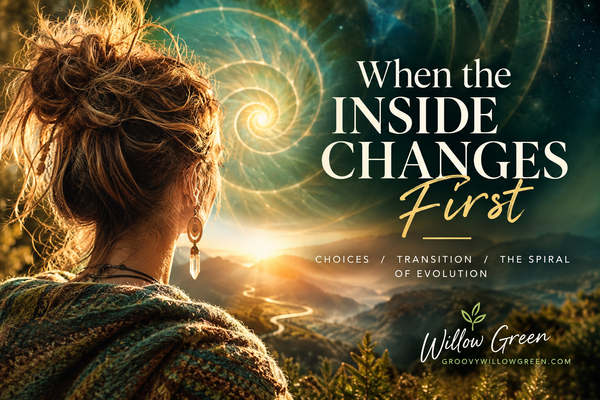
Life is a spiral.
Again and again, we return to familiar places.
The same patterns.
The same emotions.
The same relationship dynamics.
The same fears.
The same invitations.
Sometimes with the same people.
Sometimes with completely different faces.
Sometimes life brings us experiences so far outside our comfort zone that we do not even recognize ourselves.
And yet, the spiral is not bringing us backward.
It is bringing us deeper.
Each return is an opportunity to meet ourselves from a new level of awareness.
The question is not:
“Why am I here again?”
The question is:
“Who am I now as I meet this?”
Because every turn of the spiral gives us a choice.
We can recreate the familiar.
Or we can choose something new.
We can respond from old programming.
Or we can respond from deeper awareness.
We can repeat the pattern.
Or we can reclaim another piece of ourselves.
This is the journey of becoming coherent.
Not perfect.
Not finished.
Coherent.
Life Is Happening Through Us
The beginning of this journey starts with remembering.
Not remembering information.
Remembering ourselves.
Life is not happening to us.
It is not simply happening for us.
Life is happening through us.
Every experience becomes an invitation to listen more deeply.
To reconnect with our intuition.
To trust our own inner wisdom.
To honor our own lived experience.
For many of us, this requires a profound reprogramming of how we relate to ourselves.
Because we have been conditioned to look outside ourselves for answers.
We have been taught to trust external voices, expectations, systems, beliefs, and authorities before trusting our own inner wisdom.
But reclaiming our authority means returning to what has always belonged to us:
Our autonomy.
Our discernment.
Our relationship with truth.
This does not mean rejecting guidance from others.
It means developing the wisdom to recognize what aligns with our own experience and what does not.
It means learning to hear ourselves.
And learning to trust what we hear.
The Layers of Coherence
Coherence is not something we achieve once.
It is something we continually cultivate.
It happens through layers.
Each layer requires awareness, reprogramming, and alignment.
And each layer may require multiple returns because every new level of growth reveals another opportunity for integration.
We align.
We expand.
Life offers a new experience.
We discover another layer.
We recalibrate.
And we begin again.
The Identity Layer: Remembering Who We Are Beneath the Programming
Before we can embody our truth, we must become willing to question the identities we created to survive.
The roles we learned to play.
The masks we developed.
The versions of ourselves we created to be accepted, protected, or loved.
The caretaker.
The achiever.
The one who never needs help.
The one who always has to be right.
The one who stays small to keep others comfortable.
The question becomes:
“Who am I when I no longer organize my life around being accepted?”
This is where we begin discovering what is truly ours and what was inherited.
The Spiritual Layer: Remembering and Trusting
The spiritual layer is where we begin returning to our inner knowing.
Where intuition begins becoming louder than conditioning.
Where we begin asking:
“What do I know?”
instead of only:
“What am I supposed to do?”
This requires trust.
Trusting our own experience.
Trusting our instincts.
Trusting the quiet wisdom that emerges when we become still enough to hear it.
The spiritual journey is not about collecting more beliefs.
It is about removing what separates us from our own truth.
The Emotional Layer: Expanding Our Capacity
The emotional layer asks us to develop a new relationship with what we feel.
Many of us learned to suppress.
Avoid.
Control.
Disconnect.
But emotions are not problems to eliminate.
They are experiences to understand.
The practice is learning to feel without abandoning ourselves.
To experience discomfort without immediately needing to escape.
To hold emotions without allowing them to define us.
Because what we cannot hold, we cannot integrate.
The Mental Layer: Reprogramming Thought Patterns
Transformation requires more than changing our mindset.
It requires changing our thought patterns.
The beliefs we inherited.
The stories we absorbed.
The conclusions we created when we were trying to navigate life.
The unconscious programs that shape our perception.
A thought is not always truth.
A story is not always reality.
The mind must come into relationship with deeper awareness.
This requires curiosity.
Discipline.
And the willingness to question what we have always believed.
The Physical and Nervous System Layer: Creating Embodied Safety
Eventually, the body must be included.
Because understanding something mentally is not the same as embodying it.
The nervous system carries our experiences.
It remembers what we have survived.
It protects us based on what it has learned.
Embodiment occurs when the body begins experiencing what the mind has understood.
When safety becomes something we can feel.
When our thoughts, emotions, actions, values, and behaviors begin telling the same story.
This is coherence.
The Relational Layer: Meeting Ourselves Through Others
Relationship is where our inner world becomes visible.
Because we can understand ourselves in solitude.
But connection reveals what is truly integrated.
Relationships show us our patterns.
Our attachments.
Our projections.
Our boundaries.
Our ability to communicate.
Our ability to repair.
The moments when we judge.
When we criticize.
When we feel superior.
When someone triggers a strong reaction within us.
These are opportunities.
Not opportunities to shame ourselves.
Opportunities to look within.
What is this reaction showing me?
What is this revealing?
Sometimes what we see in others reveals qualities we have not given ourselves permission to embody.
Their courage.
Their freedom.
Their creativity.
Their confidence.
And sometimes it reveals parts of ourselves we would rather deny.
Our own anger.
Our own disconnection.
Our own unconscious choices.
Wholeness means we stop pretending these parts do not exist.
We become willing to see ourselves completely.
The Practice Is in the Sensation
The greatest opportunities often arrive through sensation.
The moment we want to avoid.
The contraction.
The discomfort.
The emotion.
The uncertainty.
The practice is not immediately asking:
“How do I make this stop?”
The practice is asking:
“What is this offering me?”
“What is this teaching me?”
“What is the opportunity here?”
Before we create a story.
Before we attach meaning.
Before we decide what it says about us.
We pause.
We listen.
We become curious.
Because sometimes what we call pain is the sensation itself.
And sometimes it is the story we have attached to the sensation.
The fear.
The memory.
The belief.
The interpretation.
The body is constantly communicating.
But many of us were never taught how to listen.
We were taught to override.
To push through.
To ignore.
To disconnect.
Embodiment asks us to return.
To learn the language of our own experience.
To receive the wisdom our body is offering.
From Survival to Embodied Intelligence
As we practice listening, we rebuild trust with ourselves.
We begin developing a deeper understanding of our instincts.
Not just survival responses.
Not just reactions shaped by past experiences.
But embodied intelligence.
The ability to sense.
Discern.
Interpret.
Respond.
We begin asking:
Is this intuition?
Is this fear?
Is this an old pattern?
Is this a present-moment truth?
We do not become less sensitive.
We become more accurately sensitive.
We move from reaction to response.
From survival to presence.
From external searching to internal knowing.
Seeing vs Healing: The Practice of Wholeness
Perhaps this journey was never about fixing ourselves.
Perhaps it was never about becoming someone better.
Perhaps it was always about becoming willing to see ourselves completely.
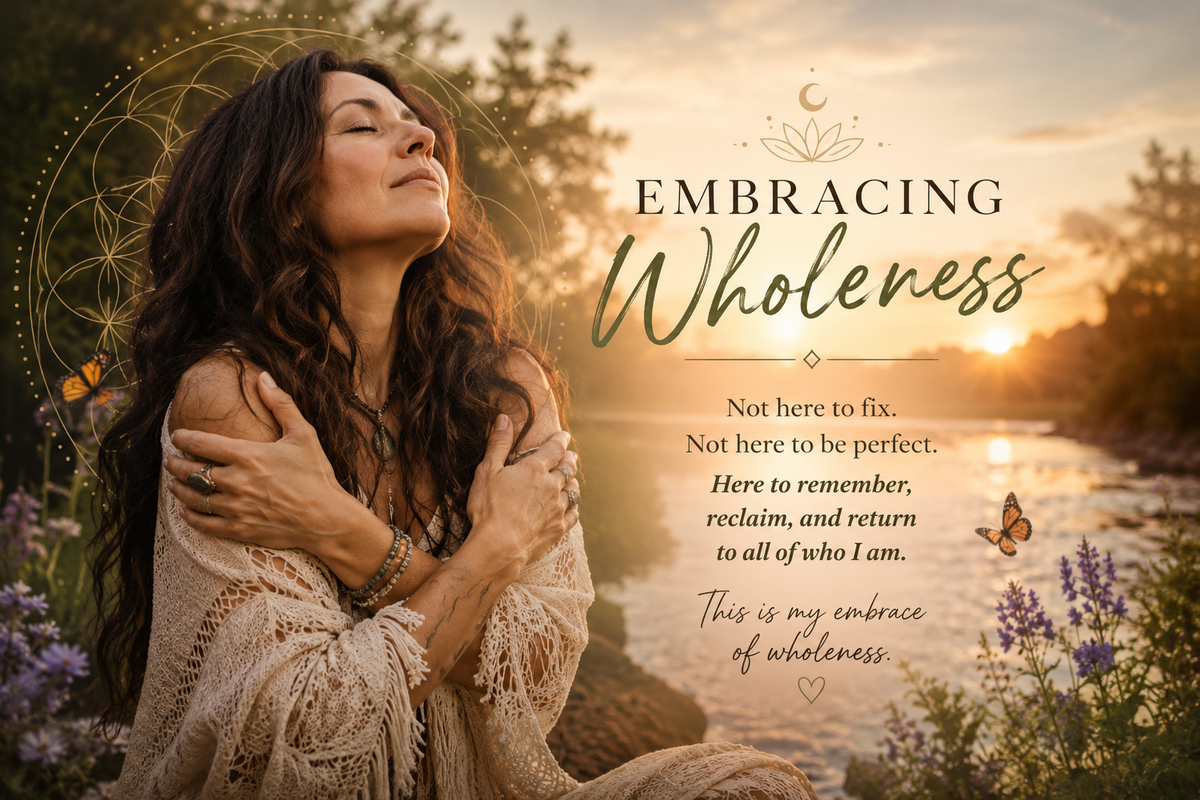
To embrace our wholeness.
Because being whole means we acknowledge all of ourselves.
The parts we celebrate.
The parts we struggle with.
The parts we understand.
The parts we are still learning to meet.
We are human.
And the human experience includes the full spectrum.
Love and fear.
Compassion and anger.
Wisdom and confusion.
Connection and disconnection.
There are moments when we offer love.
And moments when we cause harm.
There are moments when we act from awareness.
And moments when we act from conditioning.
The invitation is not a story.
The invitation is consciousness.
We learn through experiencing.
Through offering.
Through receiving.
Through relationships.
This is the point of being human.
Not perfection.
Experience.
The Courage to See Myself
Perhaps the greatest act of self-love is having the courage to see ourselves completely.
Not the version we perform.
Not the version we want others to believe we are.
The whole of us.
The loving parts.
The reactive parts.
The wise parts.
The parts still learning.
It takes courage to say:
“I have the courage to see myself.”
“I have the courage to face myself.”
“I have the courage to acknowledge the moments when I acted from fear, disconnection, protection, or unconsciousness.”
“I have the courage to take responsibility without abandoning myself.”
Because what we have done is not the entirety of who we are.
A choice does not define our essence.
A mistake does not erase our humanity.
A moment of unconsciousness does not mean we are incapable of consciousness.
We can say:
“I did that.”
“I caused harm.”
“I wish I had chosen differently.”
“And I learned.”
“And I grew.”
“And I love myself enough to choose differently now.”
That is self-love.
Not pretending we have never struggled.
Not denying the parts of ourselves we wish we had handled differently.
But loving ourselves enough to meet those parts with honesty, compassion, and responsibility.
Celebrating Every Version of Ourselves
A profound part of wholeness is learning how to celebrate every version of ourselves.
Not just the versions we are proud of.
Not just the moments when we showed up with wisdom and awareness.
All of it.
The version who was still learning.
The version who was afraid.
The version who reacted instead of responded.
The version who made choices we would never make today.
We do not have to be ashamed of who we were or where we came from.
Every version carried us here.
Every experience taught us something.
Every choice gave us information.
This does not mean we excuse harmful behavior.
It means we stop adding shame to the lesson.
We can look at ourselves honestly and say:
“Wow. I did that.”
“I understand more now.”
“I learned so much.”
“I am grateful for the awareness that came from that experience.”
Every layer.
Every season.
Every version.
Every mistake.
Every breakthrough.
All of it belongs.
Embodiment Is What Emerges
Embodiment is not another destination.
It is what emerges when all the layers come into relationship with one another.
When our identity, spirituality, emotions, thoughts, body, nervous system, and relationships are communicating.
When the different parts of ourselves are no longer fighting for control.
When we are internally aligned.
Embodiment is coherence in motion.
But because life continues to move, coherence requires continual recalibration.
A new experience changes us.
A new awareness emerges.
A new layer becomes visible.
And we return again.
Not because we failed.
Because we evolved.
The Invitation Is Not to Arrive
The goal was never to reach a place where we are permanently evolved, permanently aligned, or permanently complete.
Because the moment we believe we have arrived, we stop living.
We stop listening.
We stop discovering.
Life is movement.
Life is being in relation with.
Life is an experience.
The goal is not to stay in one place.
The goal is to learn how to continuously return to ourselves.
To notice when we have moved out of alignment.
To listen.
To recalibrate.
To choose again.
The spiral is not something to escape.
It is the very nature of being alive.
And perhaps this is why we are here.
Not to fix ourselves.
Not to become something other than human.
But to experience the fullness of being human.
To love.
To learn.
To create.
To laugh.
To make mistakes.
To grow.
To evolve.
To return.
Again and again.
The spiral keeps turning.
And that is not the problem.
That is the gift.
-Willow

Come home to yourself.
If this speaks to something you’ve always known but couldn’t quite name, I invite you to go deeper.
Your next layer is waiting.